
Advertisement
Tales from the chopping board: How to be Egyptian Enough
8 September 2026 · From the Chopping Board
To mark the addition to ckbk of the newly published title Egypt: Recipes and stories from an ancient land, ckbk user Omar Khafagy (now based in Toronto) shares his contribution to our Tales from the chopping board series, looking back on his Egyptian culinary heritage.
By Omar Khafagy
I am part of the Egyptian diaspora. And when a member of a diaspora writes, especially on that delicate subject of food, there is an unspoken expectation that their story be representative of some shared experience. A reader expects that they will be learning about the experience of belonging to a diaspora.
"Belonging to a diaspora." A funny phrase, I think. The word diaspora comes from the Greek diaspeirein, a word which according to Merriam-Webster, means "to scatter, spread about." How can one belong to a scattering? And yet the word does accidental justice to the experience; my sense of identity is scattered. What I know of my heritage is shaped almost entirely through Egyptian parents whose second language, English, is my first. I grew up listening to the sounds of Arabic, able to speak certain phrases, but suffering so enormously in comprehension that I often thought my parents were secretly talking about me whenever I overheard them say the colloquial Arabic word for "never in my life": omri (عمري). In my defense, Omar is spelledعمر in Arabic. Just a single letter's difference.
My ties to Egypt were strongest in the earlier days of my childhood. At the time, we lived in Toronto in an area with other Arab immigrants. We would regularly visit a grocery store called Nasr Foods, located in a strip mall on Lawrence road, which came to represent Egyptian cuisine for me despite not being explicitly Egyptian. Entering that store felt like teleportation. One moment we would be in Toronto listening to the soft roar of zipping cars, smelling gasoline from the gas station next door, and looking up at the signs of each store in the strip mall. Then, with the push of a heavy door, we would be somewhere else. Not Egypt, exactly, but somewhere with Arabic letters, Arabic music, and Middle Eastern smells. We would pick up vegetables, pickles, olives, basterma for my favourite egg dish, roumy cheese for sandwiches, and golden pita bread in big clear bags from a wall of shelves that held stacks of them, always fresh. I would help my mother by picking up the bags and bringing them to wherever she had parked the cart, pressing them against my chest to feel their warmth and enjoy the yeasty scent that escaped. To this day, the smell of bread feels like a hug.
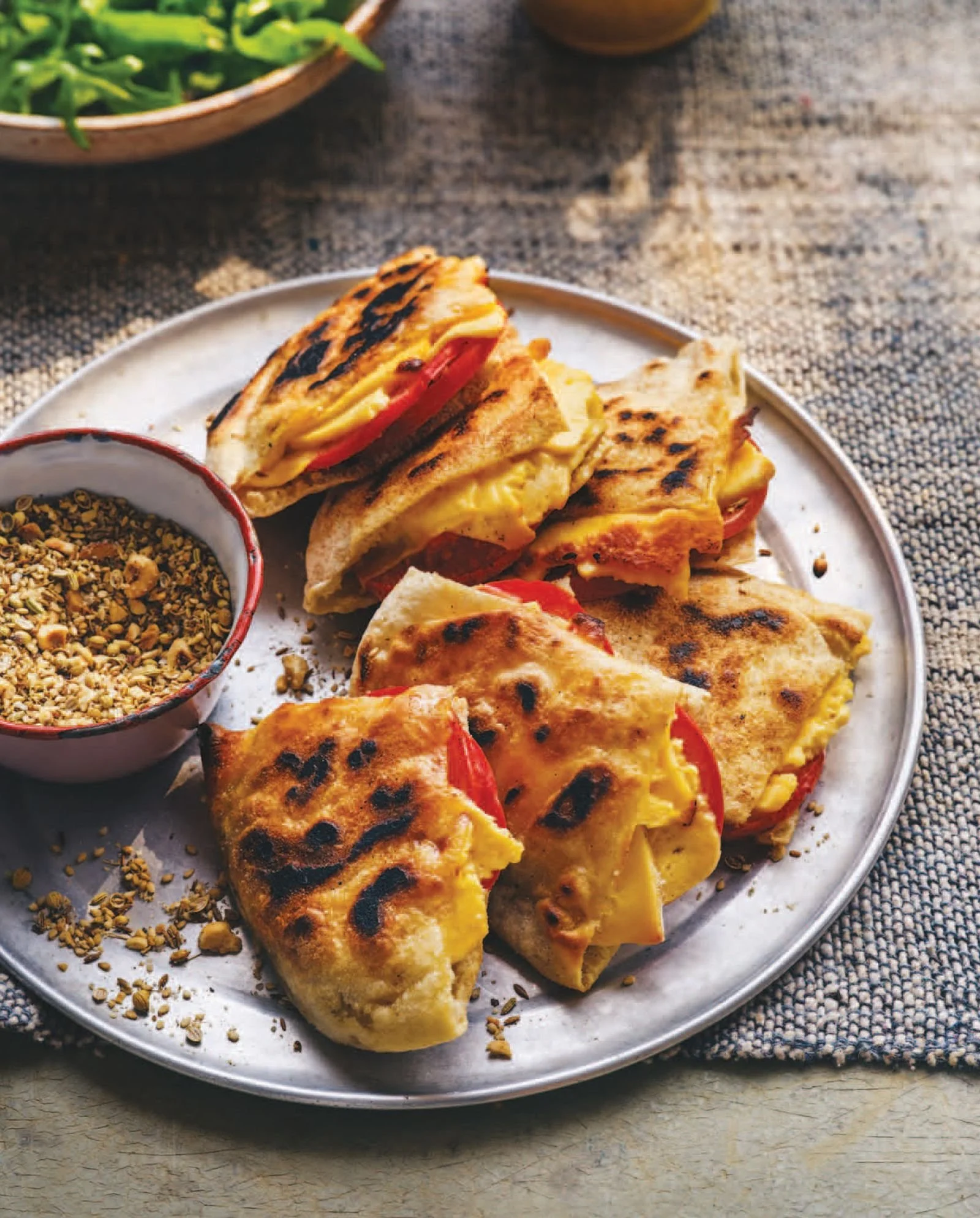
Rumi Cheese Toastie from Egypt: Recipes and stories from an ancient land by Suzanne Zeidy and Rawah Badrawi
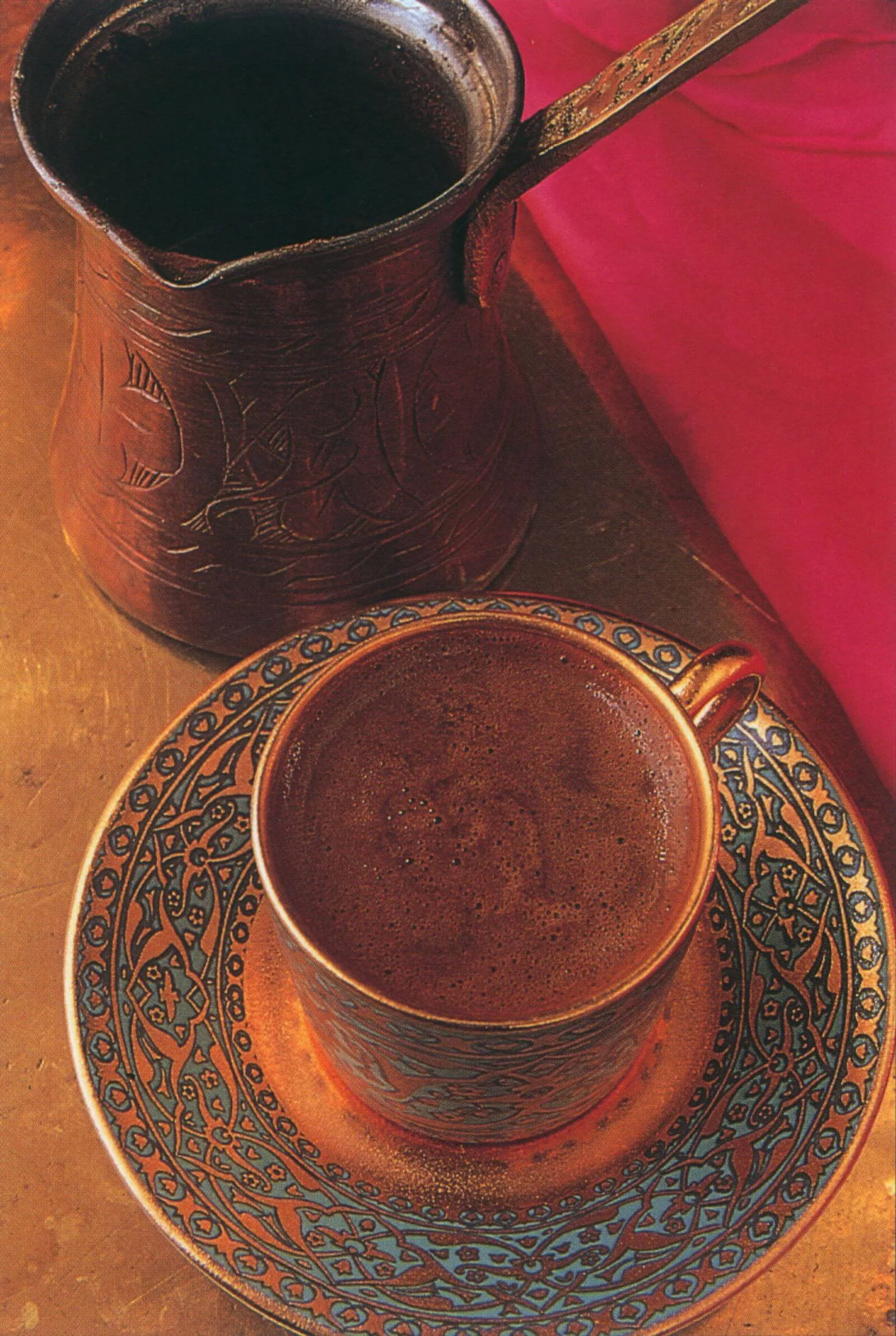
My father was always with us, being the one who drove, and he would wander off to do dad things. I was never sure what he was doing, but I always kept an eye out for when he eventually landed at my favourite part of the whole store: the deli. Calling it a deli feels generous compared to the huge glass displays at my local supermarket. At the peak of the store's expansion, I think it was maybe three short display cases containing cheese, deli meat, and sweets. Behind this was a large white coffee grinder. If I got to the deli before my dad finished his order, I could usually sweet-talk my way into a chunk of pistachio halva. If I was extra good, or maybe my dad just wanted to make me smile, I could get a little box of my favourite sweet, a kind of knafeh that Arabs from the Levant call mabruma, but which Egyptians call bourma or just knafeh. Even now, as a father with kids myself, my dad will occasionally surprise me with a box of bourma. But the real prize, especially in the winter, was the warm white paper bag of freshly Turkish-ground coffee my dad would hand to me. Just as with the pita bread, I would squeeze the bag, relishing the sensation of the crinkly paper giving way to my small fingers and drinking in the heady mix of dark roasted coffee and what I didn't learn until later was cardamom.
In these early days, our home smelled like rice and molokeya, bamiya, macarona bechamel, kibda iskandarani, and other classic Alexandrian and Egyptian dishes. And in those days, I visited Egypt a couple of times and can remember standing mute next to cousins and relatives as they would talk between one another, a familiar but meaningless hum of Arabic that must have been about food because soon after I’d be handed a warm cup of koshari in the middle of the street. Or perhaps I would hear a knock at the door of my uncle's apartment in Alexandria and would be told to stay out of the way as relatives strode in carrying plastic bags filled with feasts of street food like ful [Egypt’s national dish], stuffed pigeon, grilled fish, salata baladi and others that I cannot for the life of me remember. My early childhood was very Egyptian.
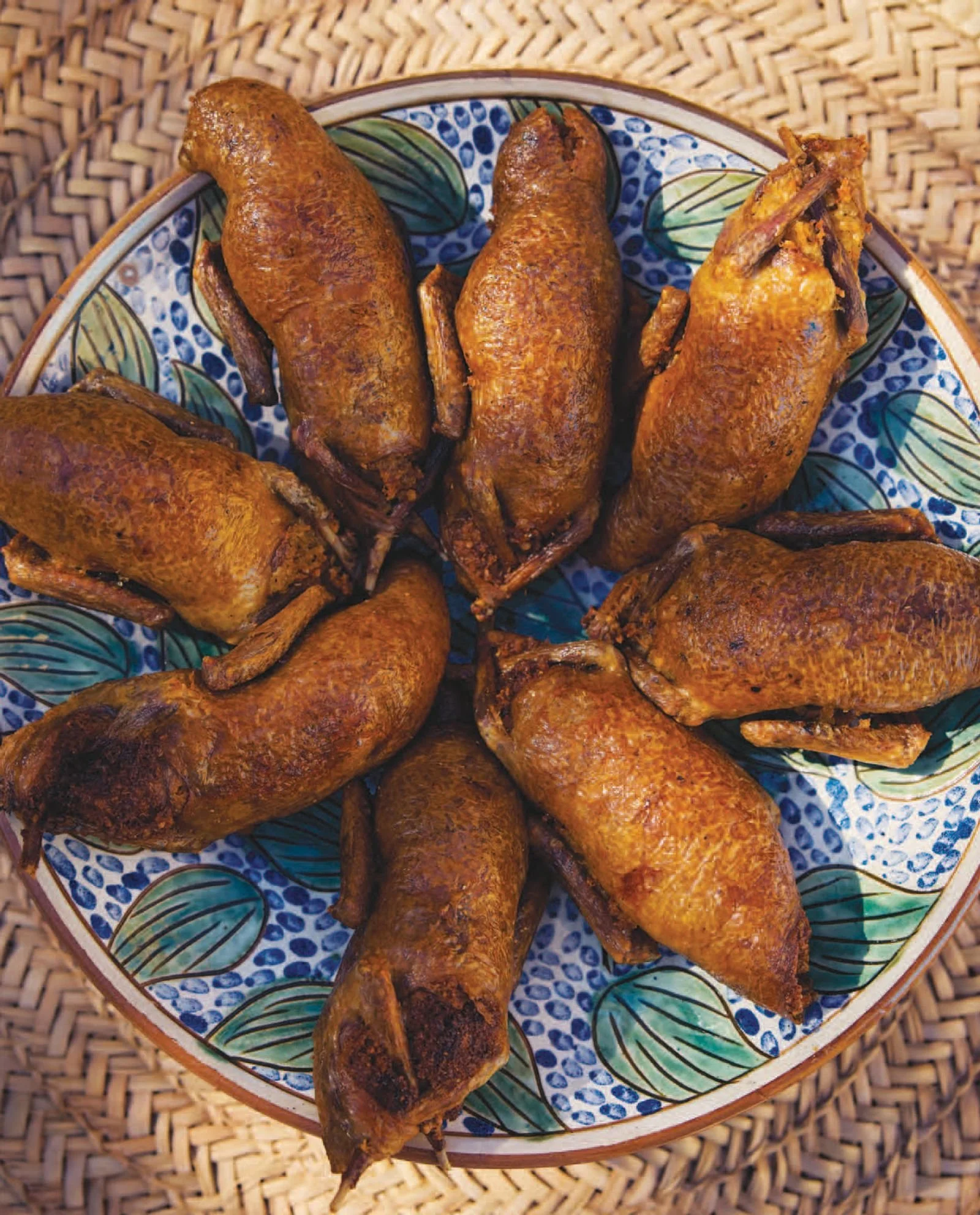
Stuffed Pigeon with Cinnamon-Spiced Rice from Egypt: Recipes and stories from an ancient land by Suzanne Zeidy and Rawah Badrawi
And then things changed.
My brother was born. My parents, seeking better work opportunities and a better quality of life, moved north of Toronto to Markham, which was then a small town gradually filling with immigrants from Hong Kong. At first we still travelled often to Nasr Foods, but as my dad's work got busier and demanded more travelling, and traffic between Markham and Toronto worsened, we spent less time in the city. The rest of my childhood would be spent hearing Cantonese and Mandarin, and the scents of those days were wok hei, beef brisket noodles at the shop down the street during school lunch, five-spice roast duck, and the ever-calming floral fragrance of jasmine rice and jasmine tea. The earthy, smoky, slightly nutty scent of pita bread that gave me so much comfort was gradually replaced by the buttery scent of pineapple buns.
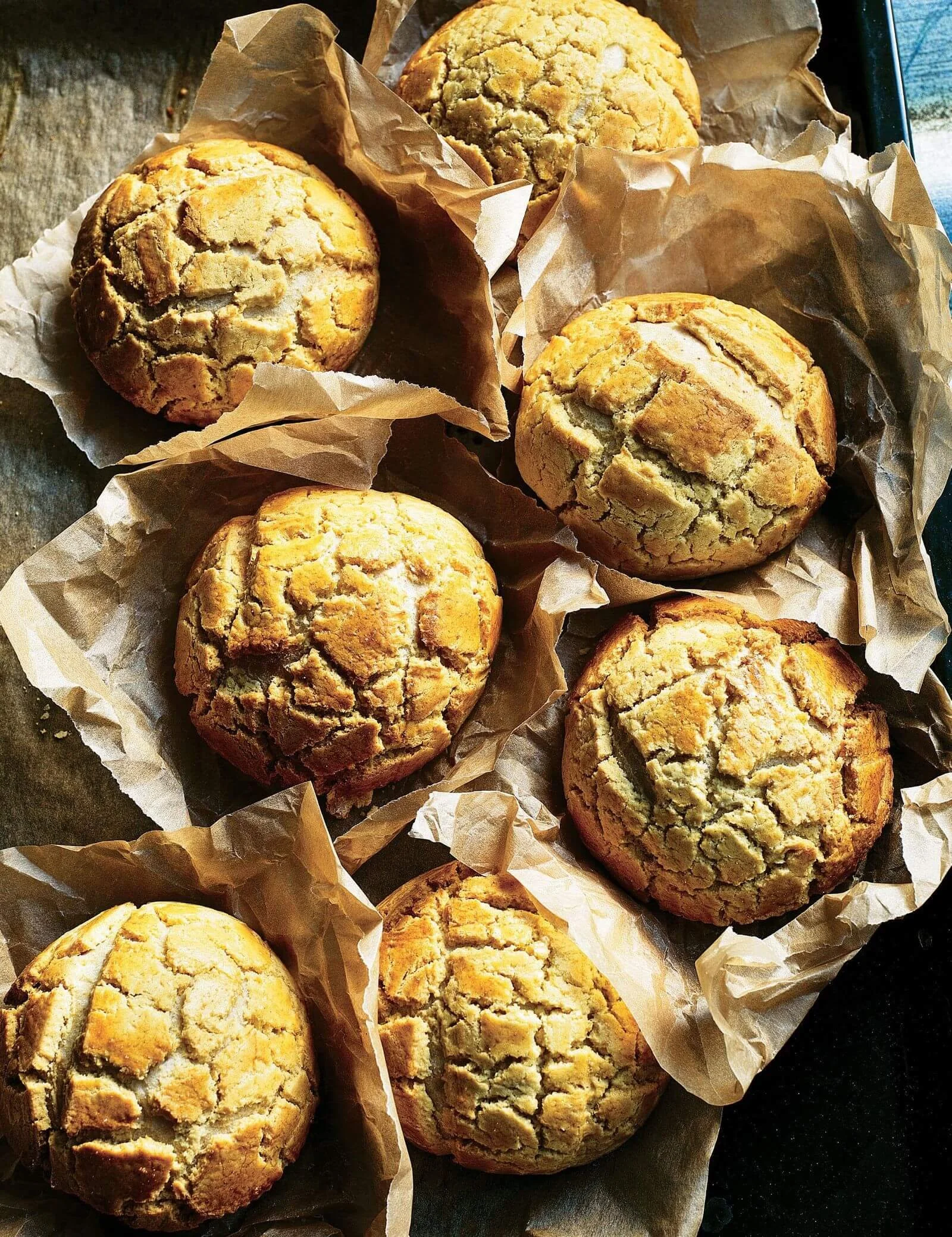
But those days also smelled like the keema samosas sold by the Pakistani uncle outside the ballroom where we had our Friday prayers. They smelled, too, of fatayer sabanekh and fatayer jebneh at the home of the only other Arabs I knew, a Palestinian family whose kids went to the same school as me.
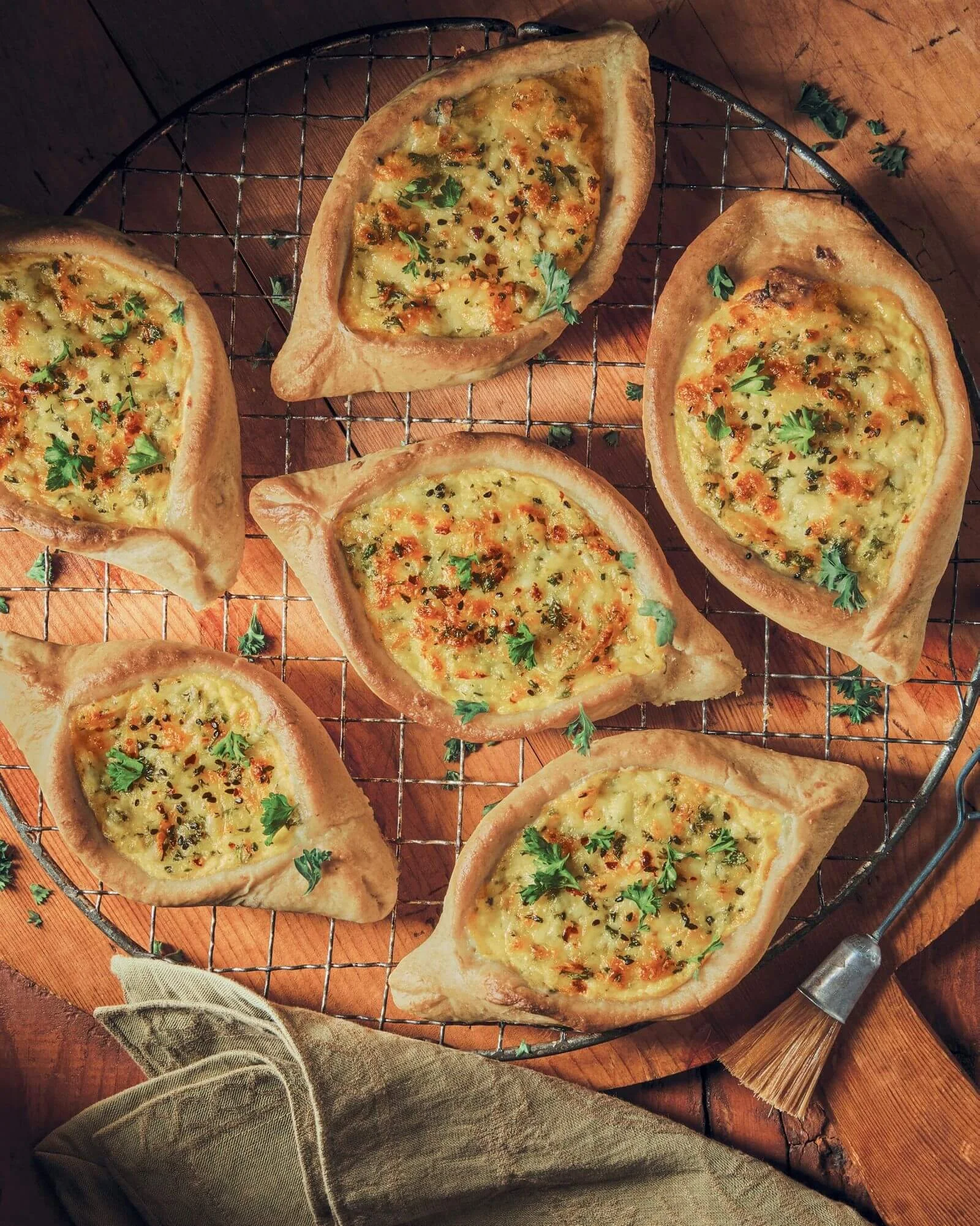
Fatayer Jebneh from Bitter & Sweet: Global Flavors from an Iranian-American Kitchen by Omid Roustaei
As time grew more constrained for my family, and we learned of my brother's allergy to peanuts and sesame seeds, and were told to avoid all nuts in general, the flavours of my home began to change. Halva, being made entirely of sesame seeds, vanished from our fridge. Bourma, filled with pistachios, became something I could enjoy only when away from home. We ate more Canadian, premade food. Hot dogs, burgers, fries, pizza, fried chicken, Kraft Mac and Cheese, instant oatmeal (peaches and cream was my favourite), cereal, pecan pie, apple pie, butter tarts and my brother's favourite: chicken nuggets. And lest you see all that as a tragedy, let me assure you: in some ways, I was elated. At last, "normal" food. The kind my classmates had. And after years of resistance, my mother finally let us eat chicken wings. A true miracle. Though I confess that I didn't enjoy them at all until I discovered honey-garlic sauce. What can I say? I have a sweet tooth.
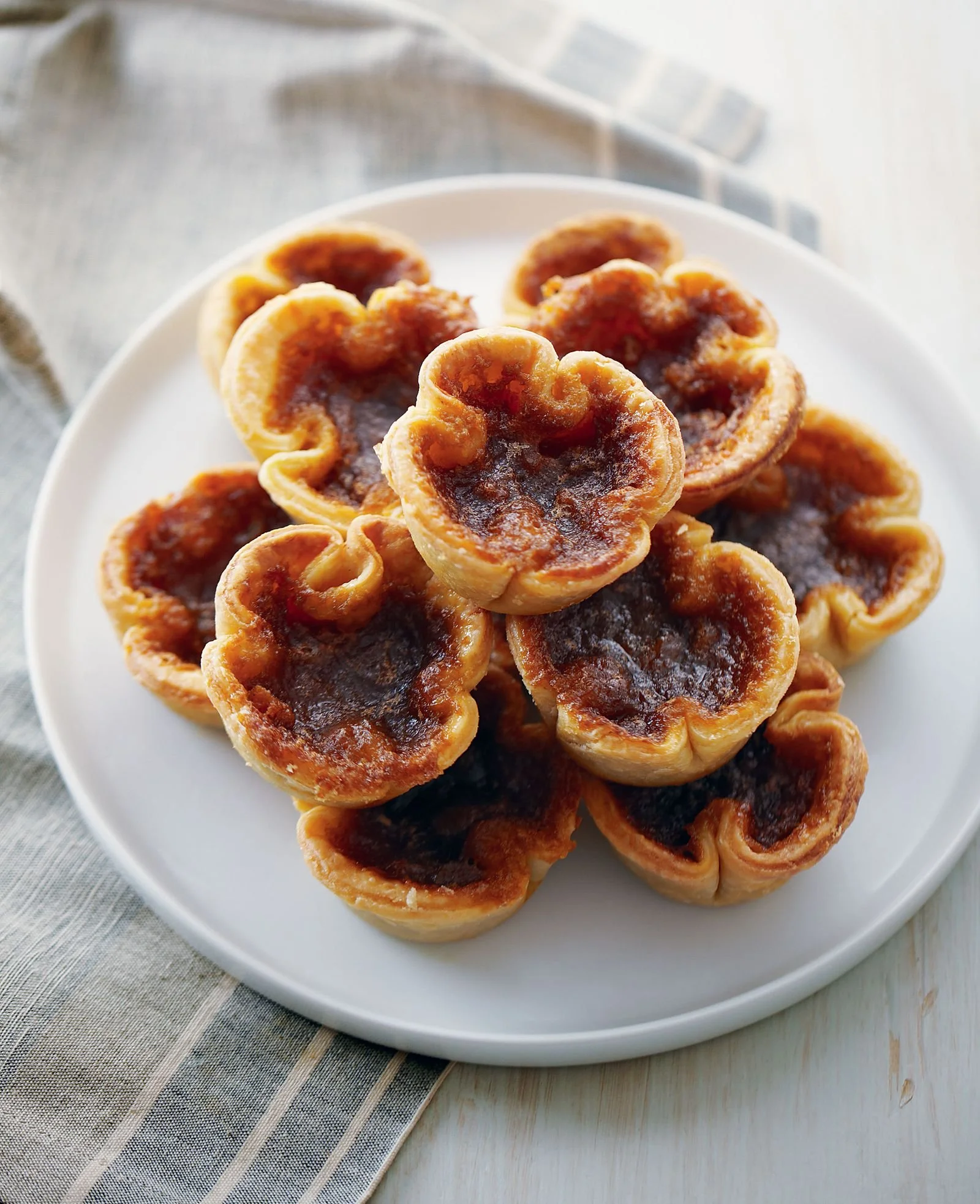
My immersion in Canadian food coincided with a self-conscious distancing from my Egyptian heritage. I wanted to belong, and wolfing down poutines and butter tarts was a delicious way to perform an idea of being Canadian. But now, as I get older, I see photos of Alexandria and feel a tugging at my heart. I smell burning corn at the end of the season in Ontario and am instantly transported to the back of a rickety black and yellow taxi on the road to my mother's family farm near Kafr el Sheikh where I first discovered that aroma, carried in on warm air through open windows. I long for a childhood I'll never have, making memories with grandparents I'll never know, and cousins I wouldn't recognize if they knocked on my door today.
I long not just to belong in Egypt and among Egyptians but also among Egyptian-Canadians, Chinese-Canadians, Anglo-Canadians, French-Canadians, and Italian-Canadians. I long to feel part of each culture that has shaped and influenced me, while always feeling like a guest in each.

Present day Toronto (Image: Unsplash)
I turn forty this month. In Islamic tradition, this age represents the very height of maturity and wisdom. I feel neither mature nor wise. If I'm supposed to be fully baked by 40, I think someone set the oven temperature too low. I am a mixture of different cultures, all of them half-finished, none of them allowed to set completely.
This year, I began in earnest to change that. I was convinced that every inch my children grew was a grain of sand falling through the hourglass of time. I was running out of time to share with them their Egyptian heritage. This pressure drove me to try learning Arabic well enough to speak to my aging uncles and aunts and even my own parents in their mother tongue; I wanted to collect their stories and memories so that I might share them with my children. So I started taking Arabic lessons from a young Egyptian man living in, coincidentally, Kafr el Sheikh. I began reading English translations of books by Nobel Laureate Naguib Mahfouz. I started playing Arabic music in the house.
And, of course, I started cooking.
ckbk has been particularly helpful in that regard and I greatly appreciate their efforts to expand representation across a range of cuisines. The community is rich with a wide variety of lived experiences and the platform makes it easy to look for things, even for someone with as complex a cultural upbringing as mine.
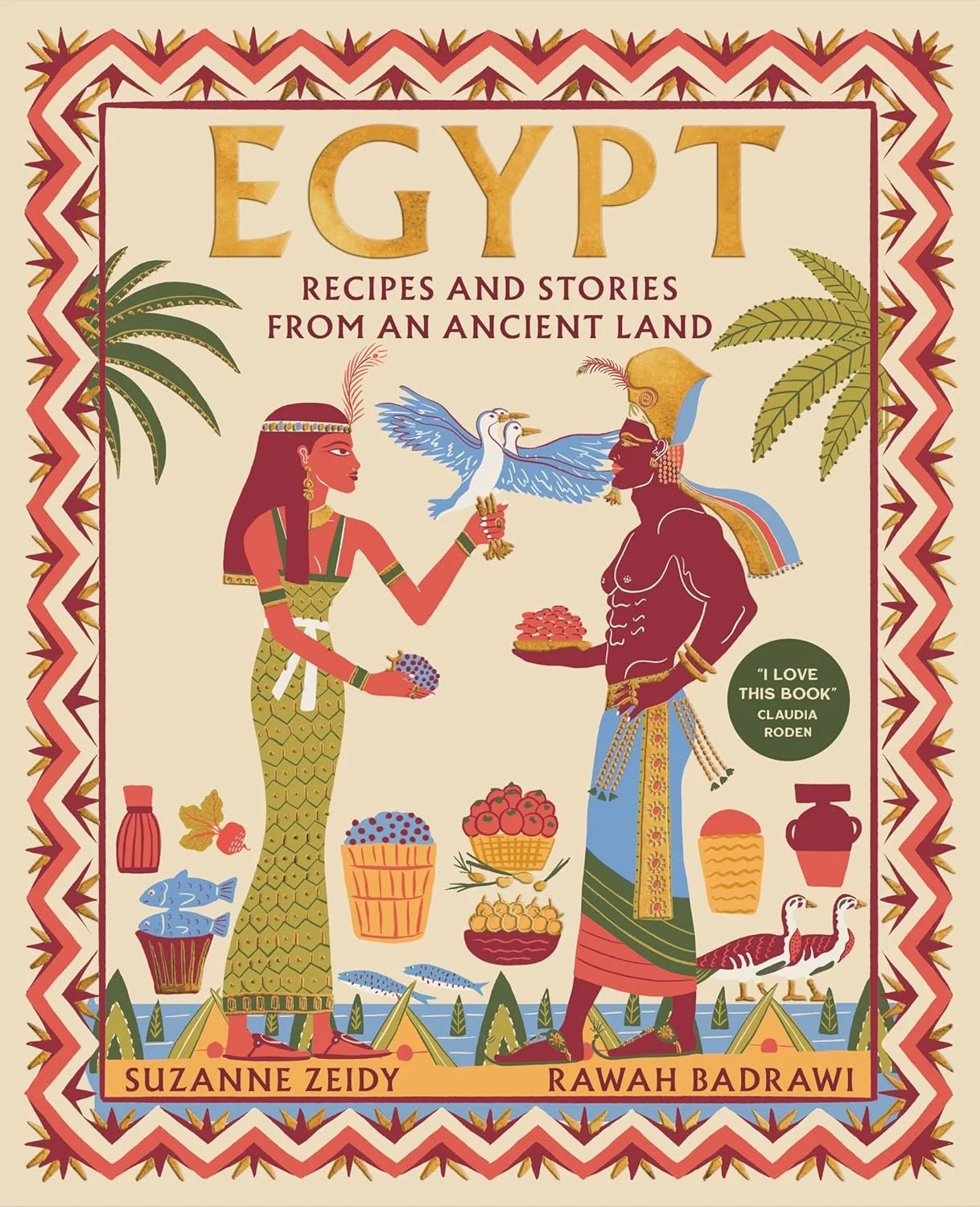
The release of Egypt: Recipes and stories from an ancient land by Suzanne Zeidy and Rawah Badrawi on ckbk felt very much like a birthday gift; a special voyage to parts of Egypt I have never visited to discover food I never knew Egyptians to eat or create. The authors share stories of the people they met, the places they visited, and the history they researched to provide rich context to each recipe. It’s another reason I love ckbk—you can search for recipes, but you can also really dig into individual cookbooks chapter-by-chapter. What emerges in Egypt is Zeidy and Badrawi's expression of the culinary identity of Egypt.
And yet it is just two author's attempts at describing that identity. When I shared some of these recipes with my Alexandranian parents, all I managed to do was spark an argument between the two about what real Egyptian food is. I was initially dismayed, but after some time I reconsidered. Perhaps I was allowing my sense of urgency to lead me into forcing a particular outcome. I can’t expect any single source to tell me what Egyptian cuisine or culture is. Even if I could freeze time long enough to master the Arabic language and perfect Egyptian food, or travel through time to grow close to my grandparents, it may be no more fruitful than talking to my parents.
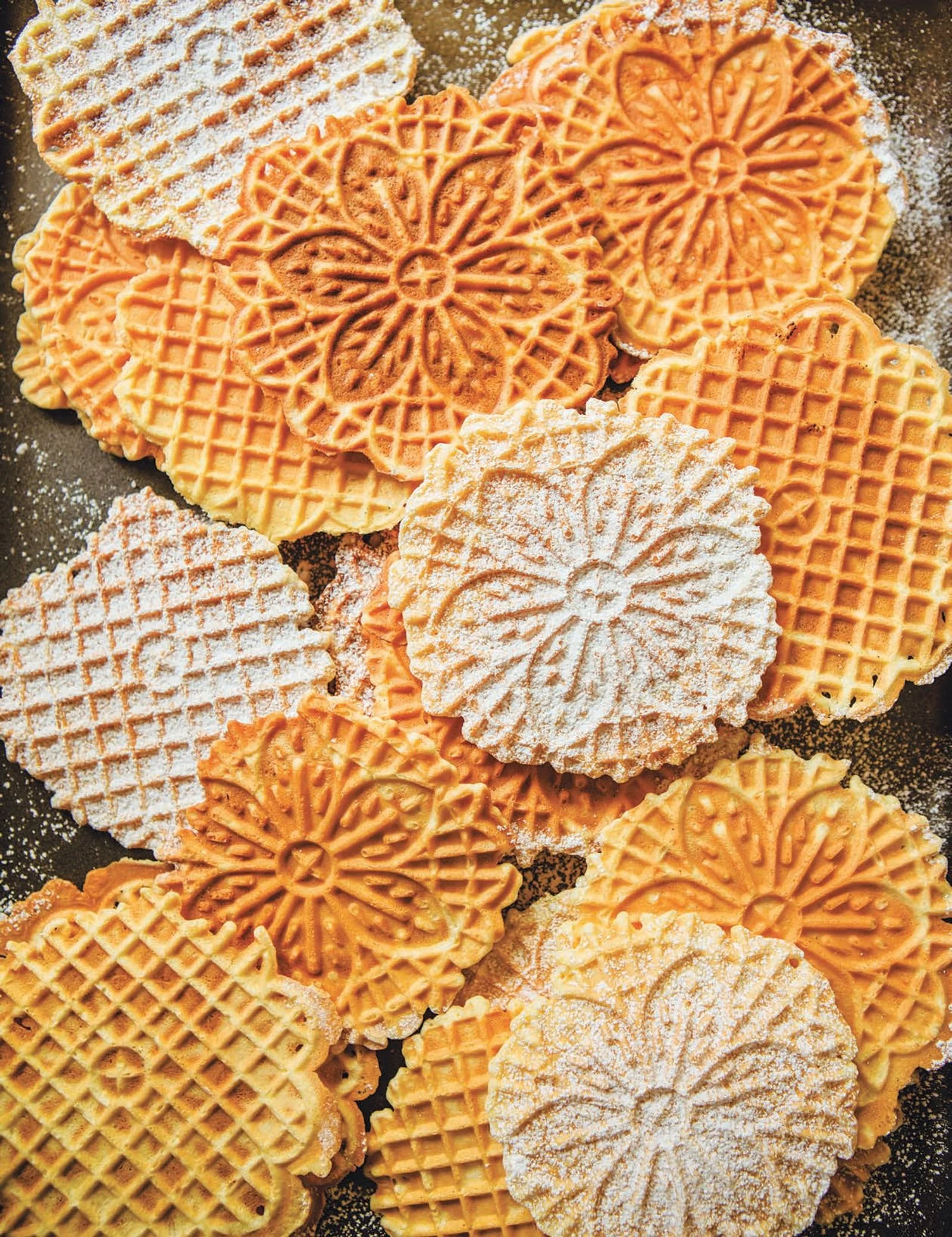
I can't inject my children with a sense of their Egyptian identity. All I can do is give them memories of their own and let them decide what they mean and what to do with them. Whether they're interested in their Egyptian side, or their mother's Italian heritage, which is a mix of northern Italian and Sicilian, I can learn a little from each and share it with them. I have the feeling they’re going to want to learn to make certain Italian cookies some day, and ckbk will be there to help me.
I still want to improve my Arabic. I want to become a strong cook in the cuisines of the culture that influenced me most, with ckbk as my secret weapon. I want to talk to cousins and aunts and uncles in their language. But the urgency has faded. I don't feel the pressure to be more Egyptian before I can show my children how to be Egyptian. I may not be Egyptian enough for some Egyptians, and I may at times still feel like an imposter.
But I am Egyptian enough to make a good meal.
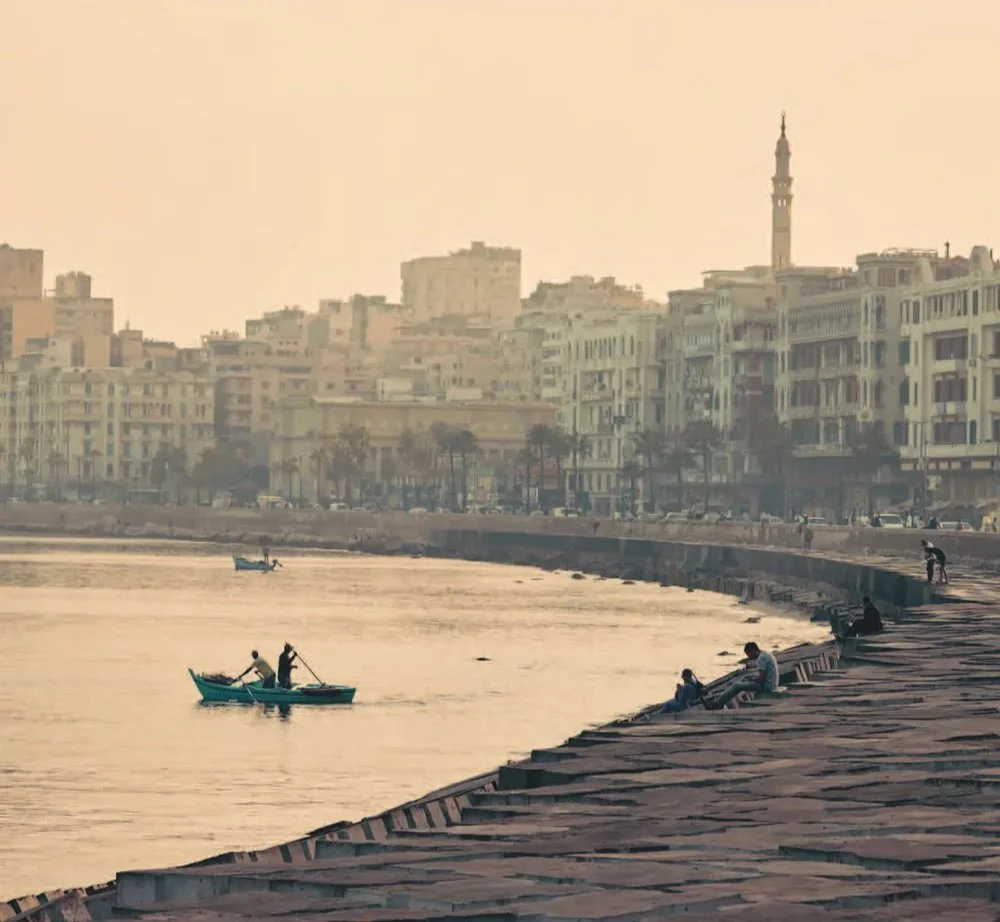
Alexandria—Egypt’s second city (from Egypt by Suzanne Zeidy and Rawah Badrawi)
About the author

Omar Khafagy is a former copywriter, father of two, and late-diagnosed ADHDer whose newsletter, The Paperback Cook, chronicles his efforts to be a better cook, writer, homemaker, and dad. He has written for The Literary Review of Canada.
Would you like to share your culinary story with us? Write to us at hello@ckbk.com with your Tale from the chopping board.
More ckbk features
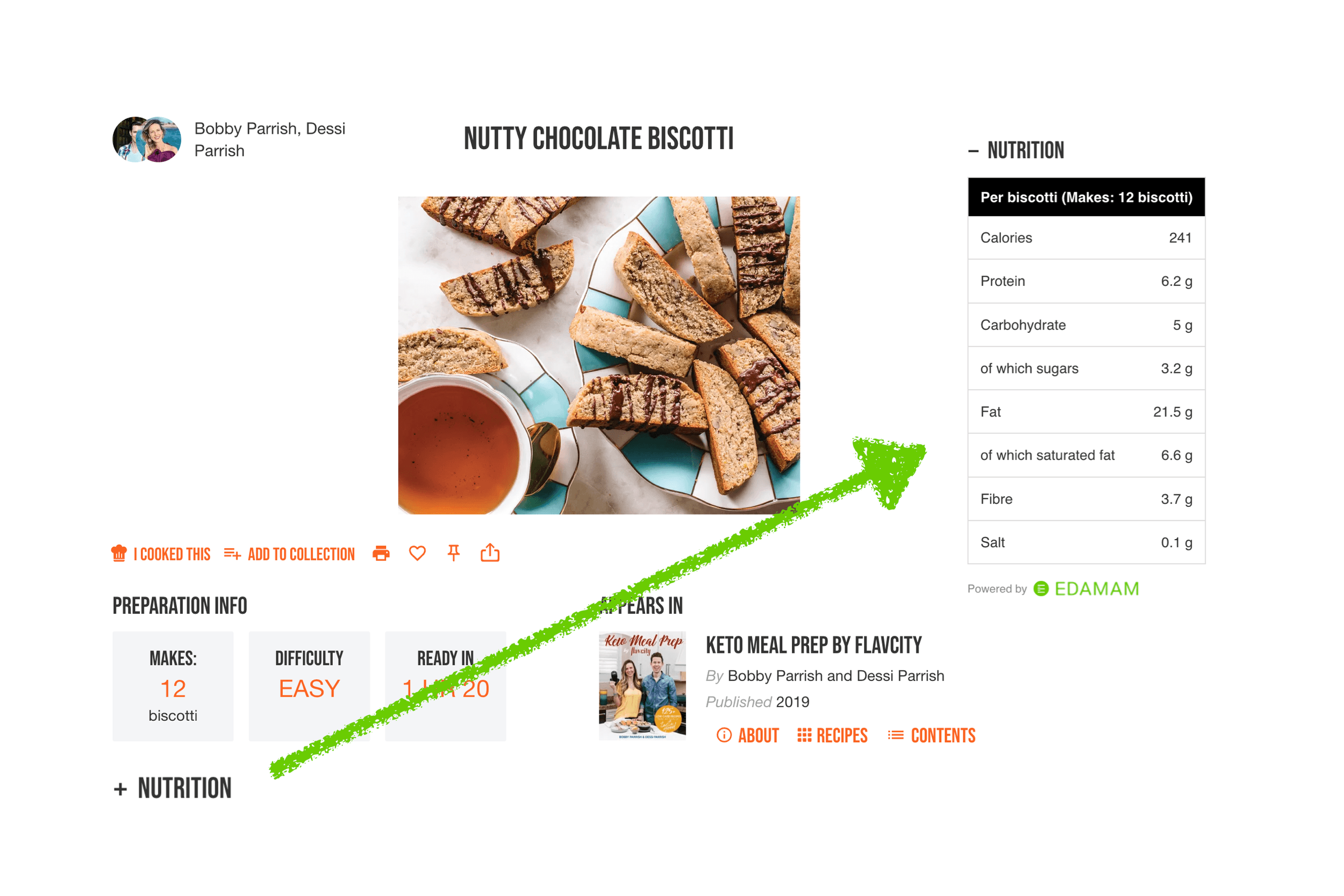
See nutritional information for any recipe on ckbk and make use of additional diet filters

Lebanese cook Lina Saad shares her experience of Ramadan fasting and the dishes central to the ritual
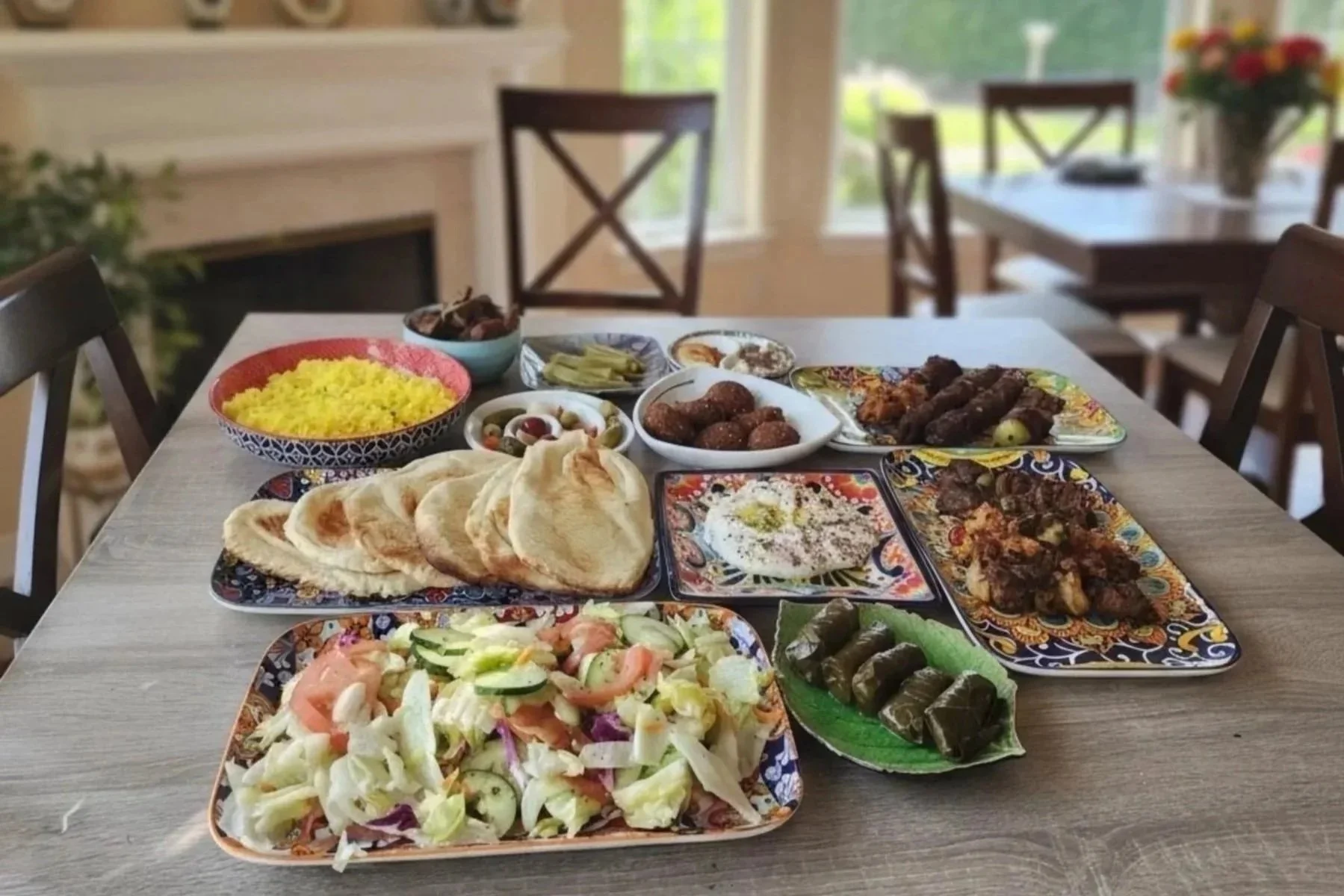
Cookbook enthusiast and ckbk user Amanda Carroll extols the virtues of this lemon and garlic sauce from the Middle East
Advertisement