Anurag Aggarwal

Anurag Aggarwal

Masterchef finalist, cookbook authors and independent food systems advisor

https://anuragfoodstory.co.uk/
Anurag Aggarwal is an independent author and food systems advisor exploring modern British food culture. Drawing on a background in commercial strategy, hospitality and food, his work spans writing, advisory work and public speaking. He is the author of Indian Made Easy and a former MasterChef UK finalist.

Most popular

‌‌‌‌‌

Anurag's favorite cookbooks

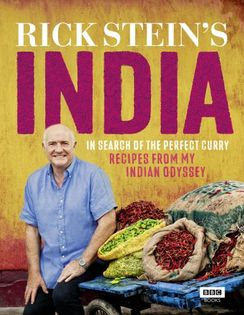
Rick Stein's India: In Search of the Perfect Curry

Rick Stein's India: In Search of the Perfect Curry

Rick Stein

I watched Rick Stein’s television journey through India after moving to Britain and found myself understanding parts of Indian food and culture through his eyes that I had somehow overlooked while growing up there. It reminded me that sometimes distance—or another person's curiosity—allows us to see what has always been in front of us. That idea stayed with me and helped inspire AnuragFoodStory. One day I would love to explore the wider Indian Food Story myself—not simply what Indian cuisine is, but what its food tells us about the country, its people and its extraordinary complexity.
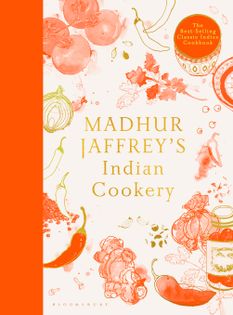
Madhur Jaffrey's Indian Cookery

Madhur Jaffrey's Indian Cookery

Madhur Jaffrey

Madhur Jaffrey represents something fundamental to me: understanding the roots before we begin interpreting them. Indian cooking can be regional, complex and sometimes intimidating, but her work brings authority and clarity to that enormous culinary language - its ingredients, techniques, traditions and context. I believe creativity becomes more meaningful when it begins with understanding, and this is one of those books that provides that grounding.

5 Ingredients: Quick & Easy Food

5 Ingredients: Quick & Easy Food

Jamie Oliver

What I have always admired about Jamie Oliver is his ability to remove barriers between people and cooking. 5 Ingredients captures that instinct beautifully: begin with a few good things and discover how much can be created from them. There is a wider lesson in that which appeals to me. We can become distracted by presentation, complexity and abundance, yet the ingredient remains the starting point - and, as cooks, we did not create any of them. Nature did that part. Our role is to understand what we have been given and do something meaningful with it.

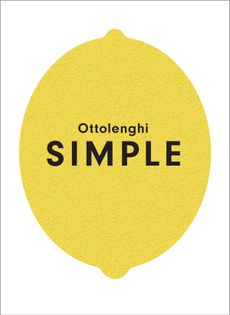
Ottolenghi Simple

Ottolenghi Simple

Yotam Ottolenghi

What I like about SIMPLE is the reminder that simplicity does not have to mean plain. A dish can require relatively little and still contain layers of flavour, contrast and surprise. That resonates with me because simplicity is often misunderstood as reduction. Sometimes simplicity is really about understanding something well enough to know what matters—and what can be left out. The challenge, in cooking as in life, is not always to add more, but to recognise when what is already there is enough.

Available on ckbk now
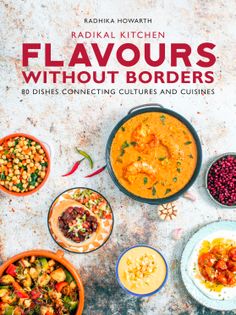
Radikal Kitchen: Flavours without Borders

Radikal Kitchen: Flavours without Borders

Radhika Howarth

Ingredients, recipes and techniques have never really respected the borders we draw on maps. They travel with merchants, migrants, families and memories, changing slightly every time they arrive somewhere new. Radhika is also a friend, but that is not why this book belongs on my list. Flavours Without Borders reflects something I increasingly believe about food: retaining your roots and allowing yourself to evolve are not contradictory ideas. Food travels because people do.

Mary Berry’s Complete Cookbook

Mary Berry’s Complete Cookbook

Mary Berry

There is something wonderfully reassuring about Mary Berry's cooking. It doesn't need to demonstrate how clever it is. It simply makes you want to cook. For me, there is almost a maternal warmth to her work—the feeling that someone experienced is standing beside you saying, “Don't worry, just do this.” Perhaps that is why it feels like more than instruction. Some cooking teaches technique. Some cooking makes you feel looked after. Mary Berry somehow manages both.

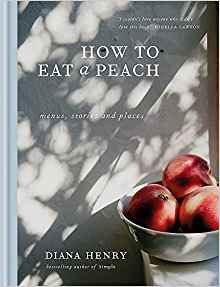
How to Eat a Peach

How to Eat a Peach

Diana Henry

I love the idea at the heart of this book: food does not exist separately from occasions, seasons, places, memories and the people around the table. Diana Henry allows recipes to sit within the experiences that give them meaning. That resonates deeply with me because I don't think we remember our most important meals simply because of what was on the plate. We remember where we were, who was there, how we felt and what that particular moment represented.

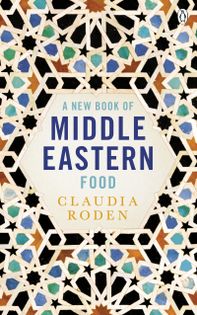
A New Book of Middle Eastern Food

A New Book of Middle Eastern Food

Claudia Roden

Claudia Roden's work is much more than a collection of recipes. Food becomes a way into history, memory, migration and the lives of people and places. That matters to me because cuisines are never simply fixed collections of dishes. They carry geography, religion, economics, family traditions and generations of movement and adaptation. Sometimes a recipe is simply the visible end of a much longer human story.

Available on ckbk now
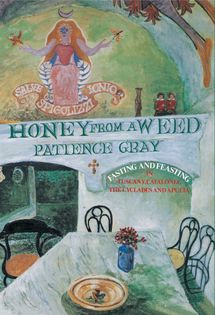
Honey from a Weed

Honey from a Weed

Patience Gray

Honey from a Weed sits somewhere between cookbook, personal recollection and a philosophy of living close to food, place and the rhythms of nature. Even the title makes me pause. We decide something is a weed because we have classified it as unwanted. Nature has made no such judgement. Something we dismiss can still nourish another living thing and ultimately produce honey. It leaves me with a question I find increasingly interesting: how much of what we value belongs inherently to the thing itself, and how much comes from the labels we place upon it? Perhaps we walk past more honey than we realise simply because we have already decided we are looking at a weed.