
Advertisement
Recipes to celebrate Hanukkah
8 December 2025 · Holiday Menu · Family Favorites
To celebrate the recent arrival on ckbk of To Life! by Judi Rose, daughter of the legendary Jewish food writer Evelyn Rose, MBE, and to mark this month’s festival of Hanukkah (the Feast of Lights), we asked Judi to share some of her favourite Hanukkah memories, recipes and traditions.
By Judi Rose
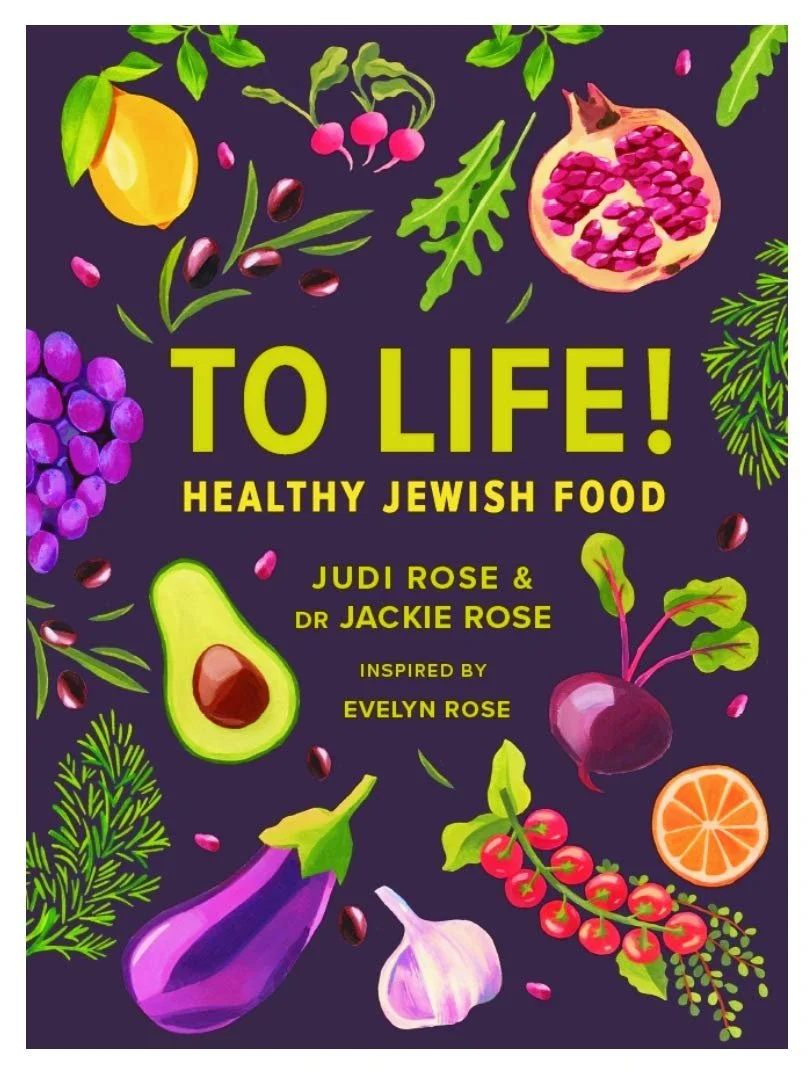
My mother, the late Evelyn Rose, would have been one hundred this month. The question she was asked most often by her fans (besides “Why did my cheesecake crack?”) was “What is Jewish food?” To which she would invariably reply, “It’s food that Jews eat! ”
From Berlin to Baghdad, wherever there’s a Jewish community, there will be Jewish food, cleverly adapted from the local cuisine and ingredients so it complies with Jewish dietary laws. The winter festival of Hanukkah was no exception. When the ancient Jewish freedom fighter Judah the Maccabee liberated Jerusalem from the Greeks he discovered a tiny flask of sacred lamp oil among the ruins of the ancient Temple. Those few tablespoons of olive oil should only have last a day, yet miraculously, so the story goes, the temple lamp continued to burn for eight days.
Two millennia on, Jewish people celebrate the “Miracle of the Oil” by lighting an eight-branched candelabra. Yet little could the Macabees have imagined the culinary consequences of their discovery. To this day, Jewish communities around the globe mark the festival by eating food fried in oil. No Hannukah is complete without a plate of crispy, golden latkes, irresistibly more-ish potato fritters.
Latkes
The taste of that first latke served after we’d opened our Hanukkah presents, is one of most enduring and delicious memories of my childhood. According to Mum, in her classic work The New Complete International Jewish Cookbook, the original latkes were cream cheese fritters fried in poppyseed oil. As Hanukah falls in winter when cream was scarce, the Jews of Eastern Europe started substituting root vegetables for the cheese. These days there are variations based on sweet potato, courgettes, celeriac, and even beetroot.
Here’s Mum’s original recipe for perfect potato latkes - light, crisp, golden and never greasy. These days I fry them in light olive oil and like to use celeriac instead of potatoes for a heart-healthier, lower carb, but equally delicious version. For an elegant brunch or pre-dinner nibble, serve on a platter with gravadlax, pickles and a dash or creme fraiche or Greek yoghurt.
EVELYN ROSE’S POTATO LATKES
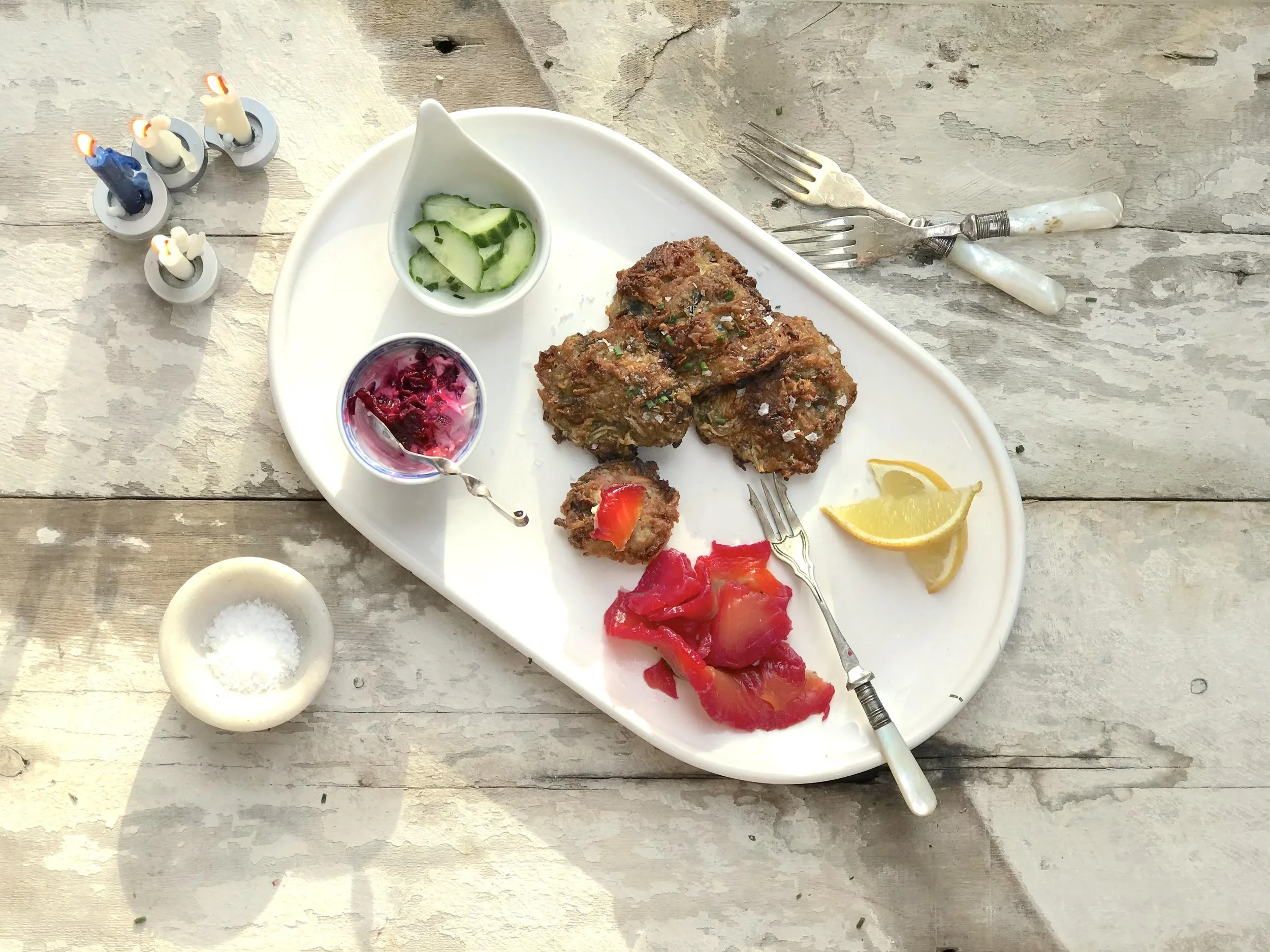
Evelyn Rose’s Potato Latkes
From The New Complete International Jewish Cookbook
Serves 4-6
Keeps 2 days under refrigeration.
Freeze 4 months.
Best served hot off the pan.
Before the advent of the food processor, the potatoes always had to be painfully grated by hand on a ‘rebeizin’ (metal grater)—this onerous job was usually delegated to the men of the household while the women hovered over the frying pan. However, it is possible to make excellent latkes in the food processor and also to freeze them ahead. Many people insist that the old ways were the best—and it’s a fact that you can never cook them fast enough to keep up with the consumption that makes latkes at Hanukkah so special. I give both methods for tradition’s sake
Traditional Method
Grate potatoes so finely that they are almost a pulp. Leave in a sieve to drain for 10 minutes. Put in a bowl and add the remaining ingredients. In a heavy frying pan put enough oil to come to a depth of 1.25 cm/½ inch. When it is hot, put in tablespoons of mixture, flattening each latke with the back of the spoon. Cook over steady moderate heat, 5 minutes on each side, until a rich brown. Drain on crumpled kitchen paper, then serve as soon as possible, or keep hot in the oven at 180°C/350°F/Gas No. 4 for up to 15 minutes.
Food Processor Method
With many grating discs the potato pulp will be too coarse, so it’s advisable to also pulse it briefly, using the metal blade. The potatoes should be grated only 15 minutes before you cook them, otherwise they tend to go an unattractive brown.
Cut the potatoes to fit the feed tube, then grate through the grating disc. Turn into a metal sieve and press down firmly with a spoon to remove as much moisture as possible. Leave to drain.
Put the onion, eggs, seasonings and flour into the bowl and process with the metal blade until smooth – about 5 seconds. Add the drained potatoes and pulse for 3 or 4 seconds, until the potatoes are much finer and are almost reduced to a coarse pulp. Put oil 1.25 cm/½ inch deep into a 22.5-cm/9-inch heavy frying pan. Shape and fry as in the traditional method.
To make ahead:
Cook the latkes, but only until they are a pale brown. Drain thoroughly, then open-freeze. When firm put into plastic bags. To reheat, either:
Put the frozen latkes into hot deep fat and fry for 2 or 3 minutes until a rich brown, or fry in shallow fat for 2 or 3 minutes on each side until a rich brown. Drain on paper towels.
Or reheat in the oven, preheated to 230°C/450°F/Gas No. 8 for 7 or 8 minutes, until crisp and brown.
Ingredients
4 large potatoes, peeled (about 675 g/11/2 lb)—enough to fill a 575 ml/20 fl oz/2½ cup measure when grated
1/2 a medium onion (about 150 g/5 oz) , peeled and cut in 2.5-cm/1-inch chunks
2 large eggs
1 level tsp salt
speck of white pepper
4 level tbsp self-raising flour (or 4 level tbsp plain flour with a pinch of baking powder added)
vegetable oil for frying
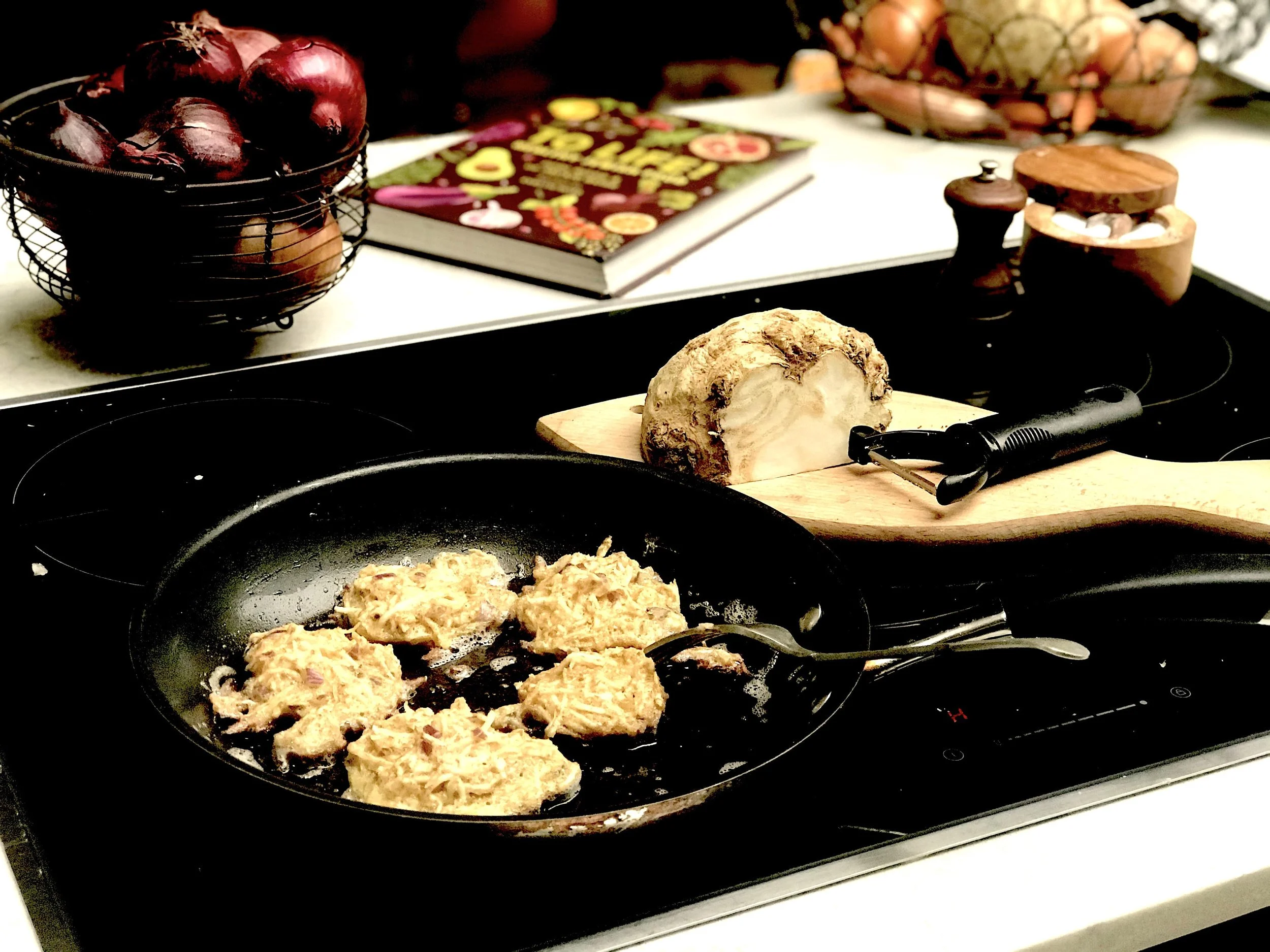
Try the above recipe using celeriac instead of potato for a healthy lower-carb option…
Doughnut delights
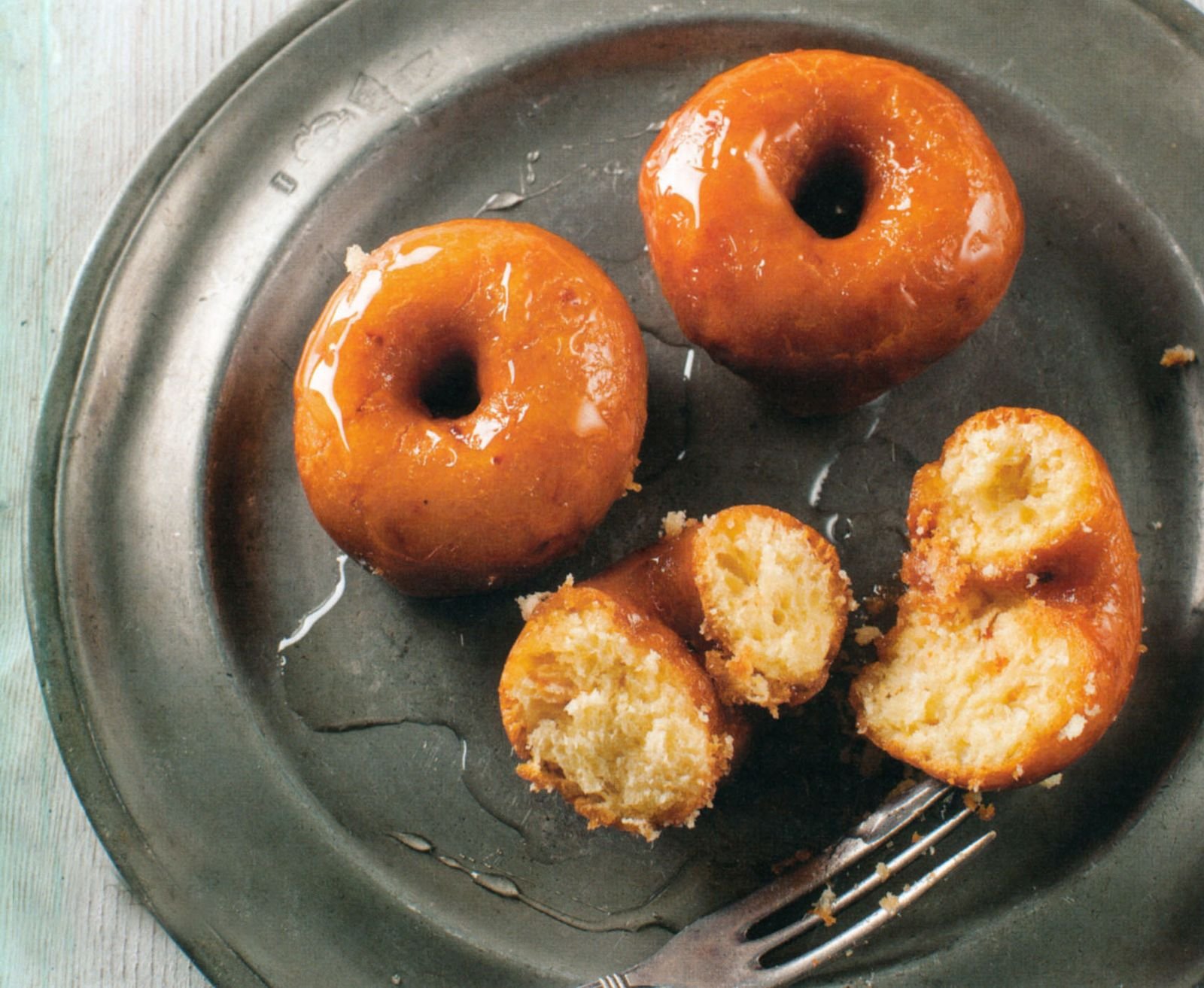
For those with a sweet tooth (alright, a very sweet tooth) there are sufganiyot, deep-fried sugar doughnuts. Sufganiyot are a relatively recent invention. In the 1920’s the Histadrut, Palestine’s national Jewish labour movement, pushed to replace homemade potato latkes with commercially produced sufganiyot to provide work for its members, and encouraged bakeries to start selling them in the run-up to Chanukah. Their efforts paid off. Sufganiyot are now consumed throughout Britain, Europe and America. “Gourmet” sufganiyot now come in flavours like dulce de leche, cheesecake, and espresso latte, with a host of ever more extravagant glazes and toppings—some even come with tiny vials of gin or vodka to inject into the middle.
For something a little less extravagant but equally (insta-worthy), try these sourdough Hanukkah doughnuts from London’s Margot Bakery, or these Sfenz (syrupy, orange-scented Moroccan doughnuts).
Cream cheese
Recipes with cream cheese are also a Hannukah tradition—the cheese is in honour of Judith, whose heroism is said to have inspired Judah and the Maccabees, and who hosted the first wine and cheese party (and after whom my mother named me). Judith plied Holofernes, the enemy general, with platters of salty cheese, then offered to quench his thirst with copious amounts of wine. And once he fell asleep from effects of the wine, she promptly cut off his head. (I’d like to think it was Judith’s heroism and the ability to host a good supper party that inspired Mum’s choice of name rather than the events that occurred later that evening…)
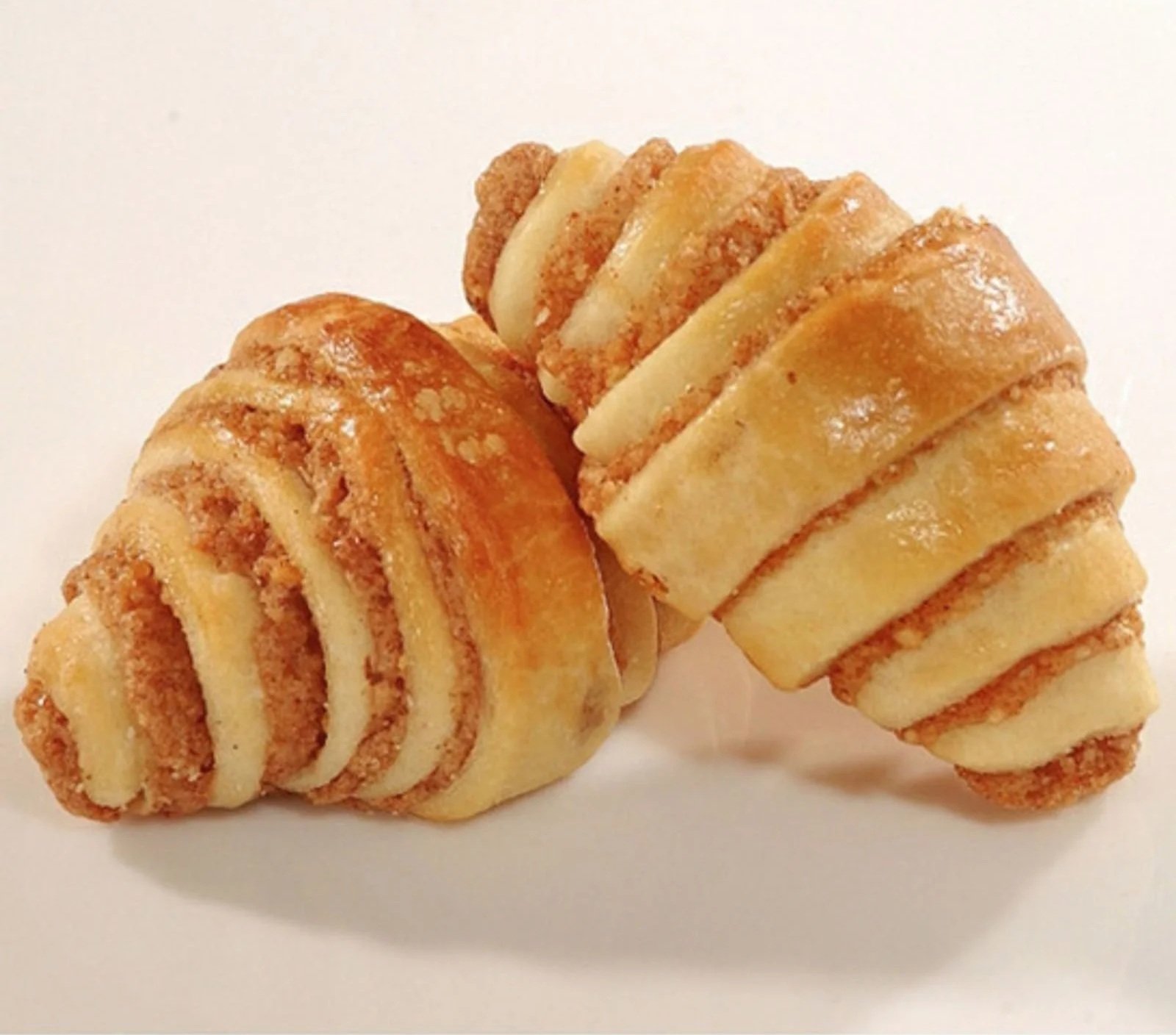
Cream cheese is a key ingredient in Rugelach, traditional cookies popular at any time of year, but an unofficial Hanukkah tradition for many. For something a bit different, Marcy Goldman’s version switches the cream cheese in the dough for ice cream…
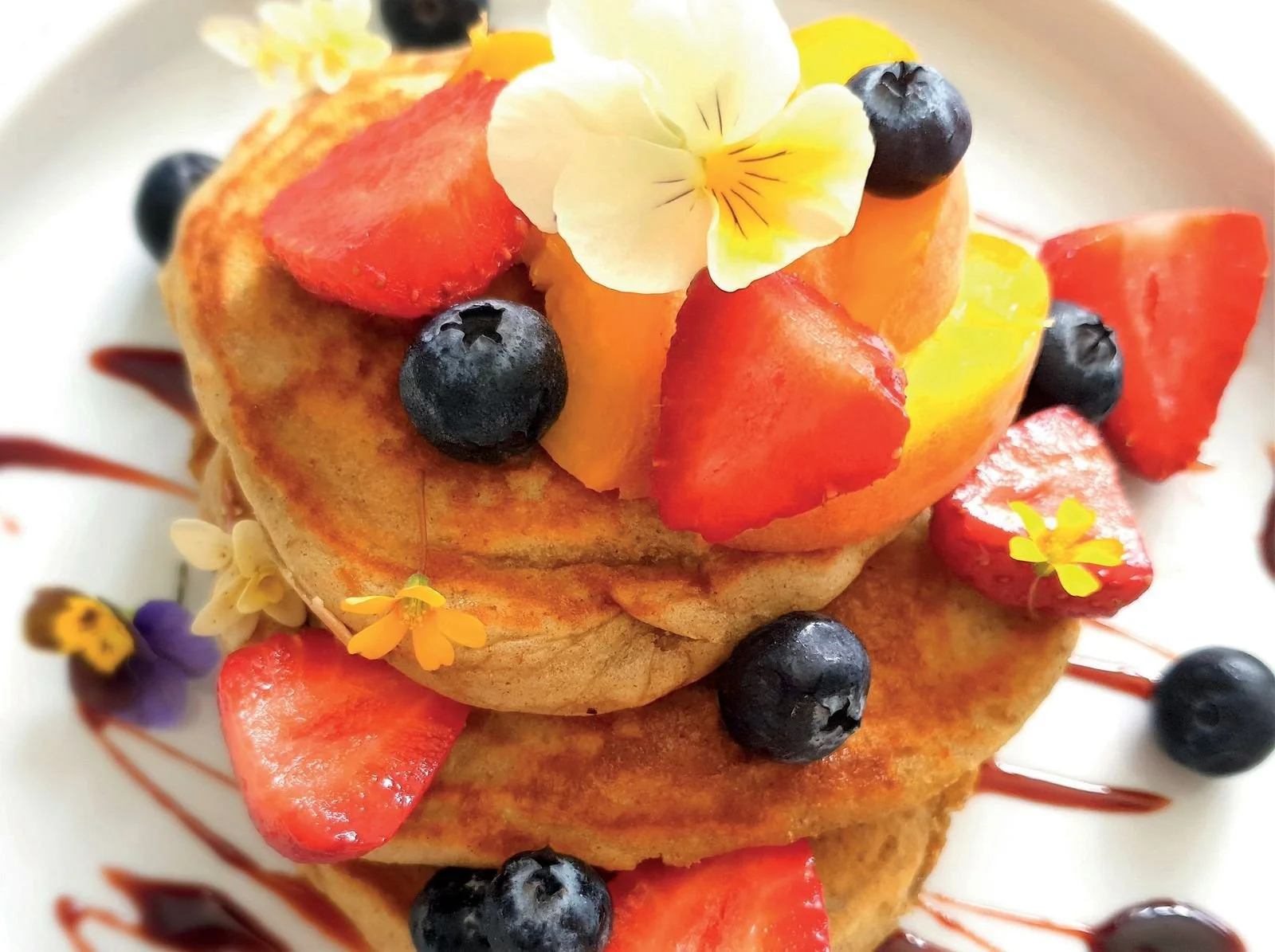
One of our own family favourites at this time of year is chremslach, or (cream cheese pancakes). These are considered far too delicious in our house to save exclusively for Hanukkah, and I have vivid memories of watching Mum whip them up for weekend lunch in our Manchester kitchen when I was barely tall enough to see over the counter. Light and crisp on the outside fluffy and creamy on the inside, dusted with cinnamon-sugar at the table, they’re an Israeli cousin of ricotta pancakes which were probably invented by Jewish cooks in southern Italy. Check out these Rye & Ricotta Cheese Pancakes by Ruth Neiman from her fascinating cookbook, Freekeh, Wild Wheat and Ancient Grains, for which I was privileged to write the Foreword.
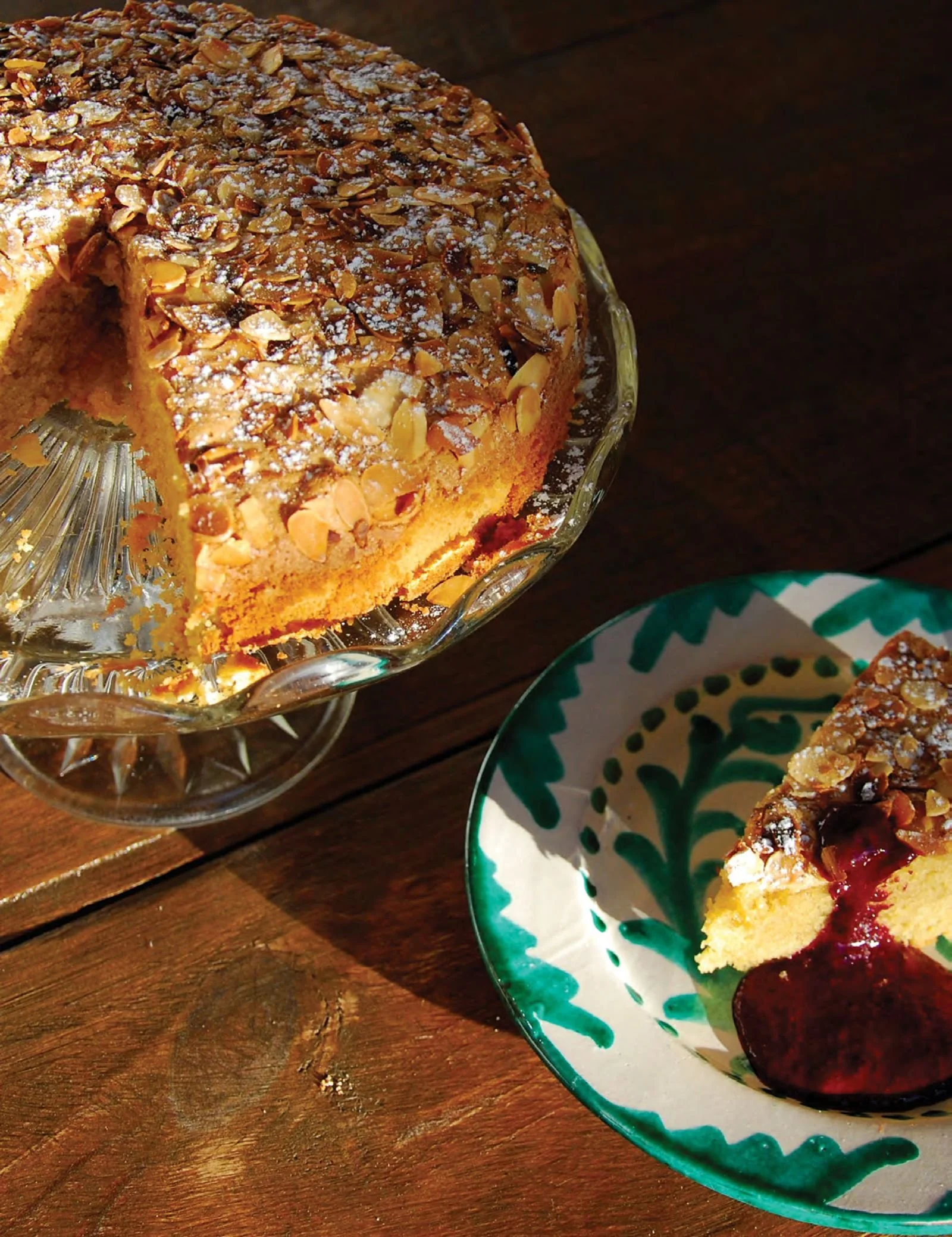
Finally, for something less traditional but still “on theme” try a cake such as this olive oil and almond cake, or this one with cinnamon and cherry.
So whether you’re celebrating Hanukkah, Christmas, Kwanza, or just fancy something delicious to ward off the winter nights, as my mother used to say, “May you enjoy it in good health.”
About the author
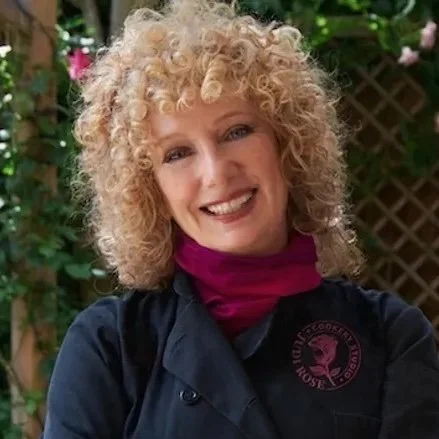
Judi Rose is the daughter of the legendary Jewish food writer Evelyn Rose, and collaborated with her mother on numerous articles, recipes and cookbooks. After a career at the BBC as a producer for Tomorrow’s World, Judi followed in her mother’s footsteps as a food writer, author and cooking teacher. Judi runs The Cookery Studio, a boutique cooking school in West London for private classes, parties and food photography. Judi’s most recent cookbook, To Life: Healthy Jewish Food, blends traditional Jewish recipes with the healthy Mediterranean diet.
16 more dishes for Hannukah
More ckbk features

Keep the recipes you need available in an instant using our new pinned recipe feature!

Clare Heal on why she loves these salty-sour Middle Eastern marvels
Kitchen designer Johnny Grey selects his very favourite festive recipes from the cookbooks of his aunt, the renowned food writer Elizabeth David
Advertisement